Column · @keywiseliving
What should a locksmith check before installing a keypad lock?
Before a locksmith begins a keypad lock installation, they need to verify that the door and its existing hardware are compatible with the chosen device. The most common mistake is assuming any keypad will work on any door. A professional will check the door's thickness, the backset measurement, the condition of the existing deadbolt or lockset, and the type of strike plate already in place. If the door is metal, has a narrow stile, or uses a mortise lock, many standard keypad locks will not fit without modification. The locksmith also needs to confirm that the door frame is square and the bore holes are the correct diameter. Skipping these checks leads to a device that binds, fails to latch, or drains batteries prematurely.
Beyond the physical fit, the locksmith must evaluate the power and connectivity requirements of the smart lock or keypad. Battery-operated keypads are common, but some models need a wired connection to a doorbell transformer or a separate power supply. For homes or businesses in Los Angeles where older wiring may be present, the locksmith should verify that the voltage and amperage match the device specifications. If the keypad uses Wi-Fi or Bluetooth for remote access, the locksmith should test that the signal reaches the lock from the router. A weak signal causes intermittent connectivity and unreliable access codes. The locksmith should also check whether the lock supports a battery backup system, so the door remains operable during a power outage.
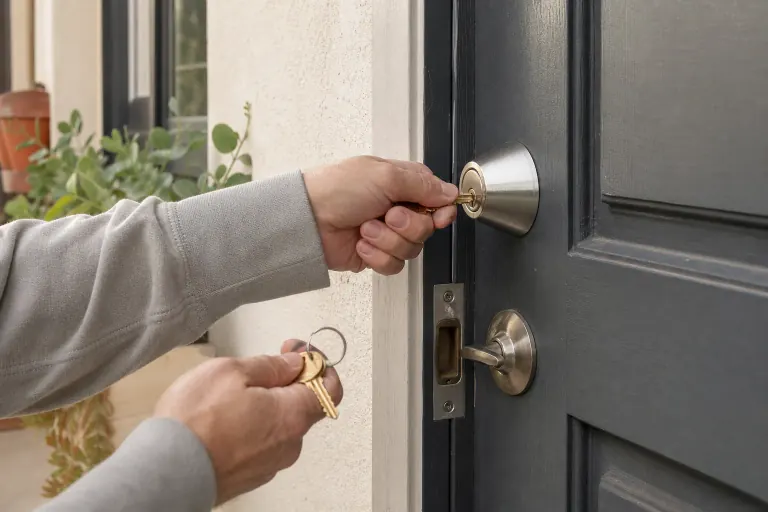
The installation itself requires careful alignment of the keypad with the deadbolt or latch mechanism. Even a slight misalignment can cause the bolt to drag against the strike plate, wearing down the finish and the motor. The locksmith should use a template to mark the screw holes and bore the cross bore and edge bore precisely. For doors that already have a lock cylinder, the locksmith may need to perform a lock rekeying to match the new keypad's key override cylinder with the existing house or building key. This step keeps the number of keys manageable and preserves security for the property owner. A lock rekeying during a keypad lock installation is a common practice that saves the customer from carrying multiple keys.

Door and frame compatibility
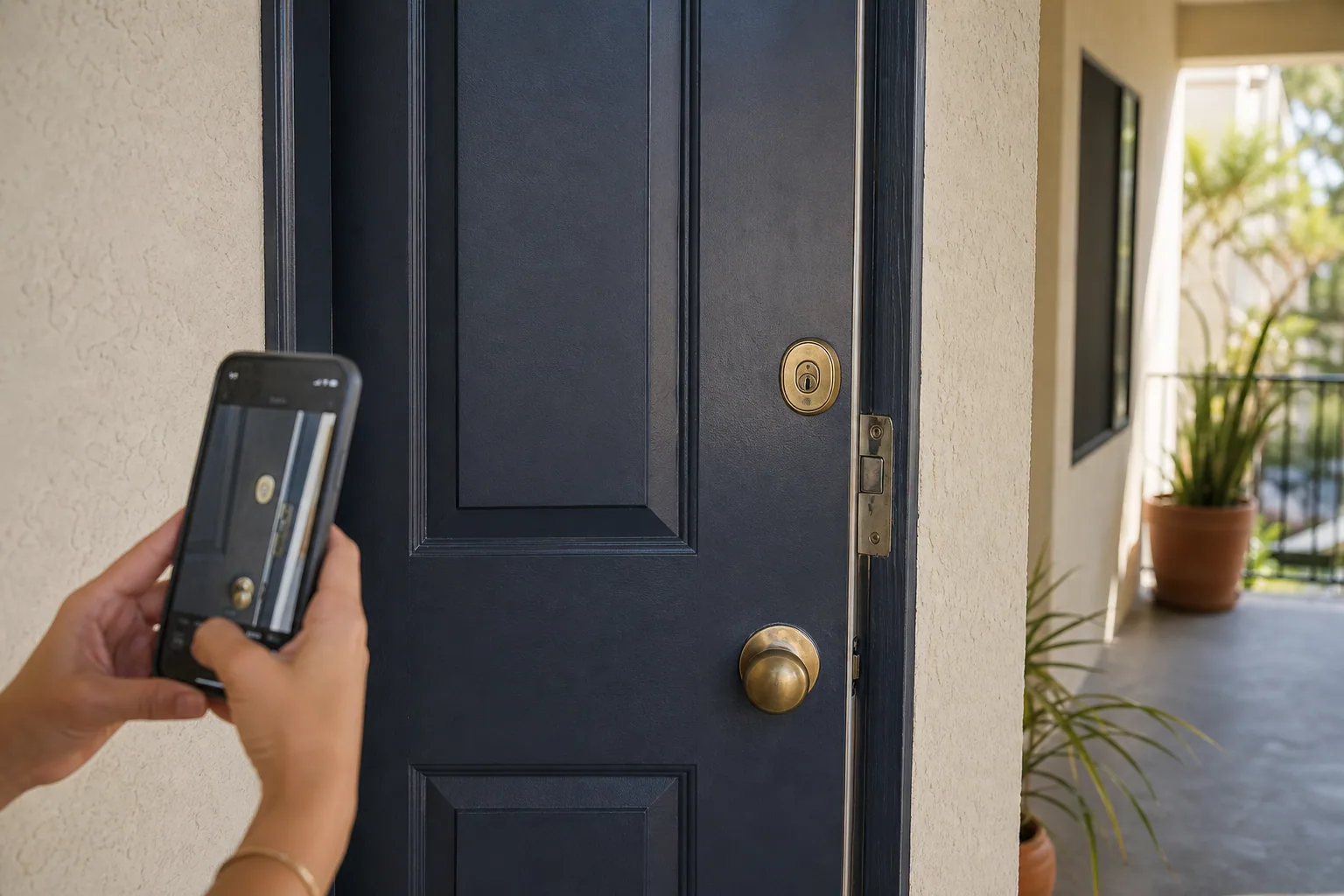
Not every door accepts a keypad lock off the shelf. The door must be thick enough to accommodate the mounting screws and the interior electronics. Most residential keypad locks work on doors between 1 3/8 inches and 1 3/4 inches thick. A door that is too thin may not hold the screws securely, and a door that is too thick may require longer screws that are not included in the box. The backset - the distance from the edge of the door to the center of the bore hole - is typically 2 3/8 inches or 2 3/4 inches. If the door has an odd backset, the locksmith may need to drill a new hole or order a special latch.
The strike plate on the door frame must also be compatible. Many keypad locks come with a reinforced strike plate designed to resist kick-in attacks. If the existing strike plate is small or uses short screws, the locksmith should replace it with the one provided or a heavy-duty equivalent. The screws should penetrate the door frame stud, not just the trim. A weak strike plate undermines the security of the entire lock, no matter how sophisticated the keypad electronics are.
Power and connectivity checks
Battery-powered keypad locks typically use four AA batteries and last between six months and a year. The locksmith should install fresh alkaline batteries, never rechargeable ones, because rechargeable batteries have a lower voltage and cause erratic behavior. Some locks show a low-battery warning on the keypad or send a notification to a mobile app. The locksmith should test this feature during installation and show the user how to recognize the warning. If the lock uses a backup mechanical key override, the locksmith should verify that the key turns smoothly and that the cylinder is not binding. A lock that fails mechanically is a liability.
For keypads that connect to a home automation system or a cloud service, the locksmith should check the Wi-Fi signal strength at the door location. A signal below a certain threshold causes frequent disconnects and delayed responses. The locksmith can recommend a Wi-Fi extender or a mesh network if needed. In commercial settings where multiple keypads are installed, the locksmith should verify that each device is assigned a unique identifier and that the access codes are programmed correctly. Duplicate codes or overlapping schedules create security gaps.
Programming and user management
Once the hardware is installed, the locksmith must program the access codes and test every function. Most keypad locks support multiple user codes, temporary codes for guests or service providers, and a master code for the administrator. The locksmith should set a master code that is not obvious, such as "1234" or the building address, and advise the customer to change it regularly. For properties with tenant turnover, the locksmith can delete old codes and add new ones without replacing the lock hardware. This flexibility is one of the main advantages of a keypad lock over a traditional lock cylinder.
The locksmith should also demonstrate how to lock and unlock the door manually using the keypad, the mechanical key, and any mobile app. If the lock has an auto-lock feature, the locksmith should adjust the timer to a delay that suits the user's routine, typically 30 seconds to two minutes. A delay that is too short locks the door before the user can step through, while a delay that is too long leaves the door unlocked for an extended period. The locksmith should explain how to disable the auto-lock feature during the day if the user prefers to keep the door unlocked while home.
Testing and final adjustments
After programming, the locksmith should test the lock at least ten times from both sides of the door. The bolt should extend and retract smoothly without hesitation. If the bolt sticks, the locksmith may need to adjust the position of the strike plate or sand the edge of the door slightly. A lock that binds under normal operation will wear out the motor quickly and drain the batteries. The locksmith should also test the lock with the door open and closed to ensure that the alignment is correct. A lock that works perfectly with the door open but fails when closed usually indicates a misaligned strike plate or a door that has sagged over time.
The final step is to clean the keypad surface and apply any protective covers included with the device. The locksmith should leave the customer with the user manual, the backup keys, and a list of the programmed codes. A professional installation ends with a walk-through where the customer can ask questions and see the lock in action. The locksmith should also note the model and serial number of the lock in the customer's file for future service or warranty claims.
A keypad lock installation is more than screwing a shiny device onto a door. It requires an understanding of door mechanics, electrical requirements, and user behavior. A thorough locksmith will take the time to check every variable before and during the installation, ensuring that the lock works reliably for years. For property owners in Los Angeles, a well-installed keypad lock offers convenience and security without the hassle of traditional keys. The investment in a professional installation pays off every time the door opens with a simple code.